Packaging Built for Salt, Smoke, and Natural Oil
In artisanal deli provisions and cured meats, the primary tactile interaction happens at the counter. When a customer receives cold cured pastrami, dry-aged salumi, or savory bakehouse hand pies, thin plastic wrap or glossy supermarket pouches instantly degrade the perception of artisanal craft.
Artisan food purveyors spend months developing dry rubs, wood smoking methods, and fermentation curves. The packaging wrapped around those products must reflect that same dedication. Heavy unbleached virgin kraft, vegetable-parchment greaseproof paper, and debossed wax stamps communicate kitchen discipline and natural provenance before the product is even unwrapped.
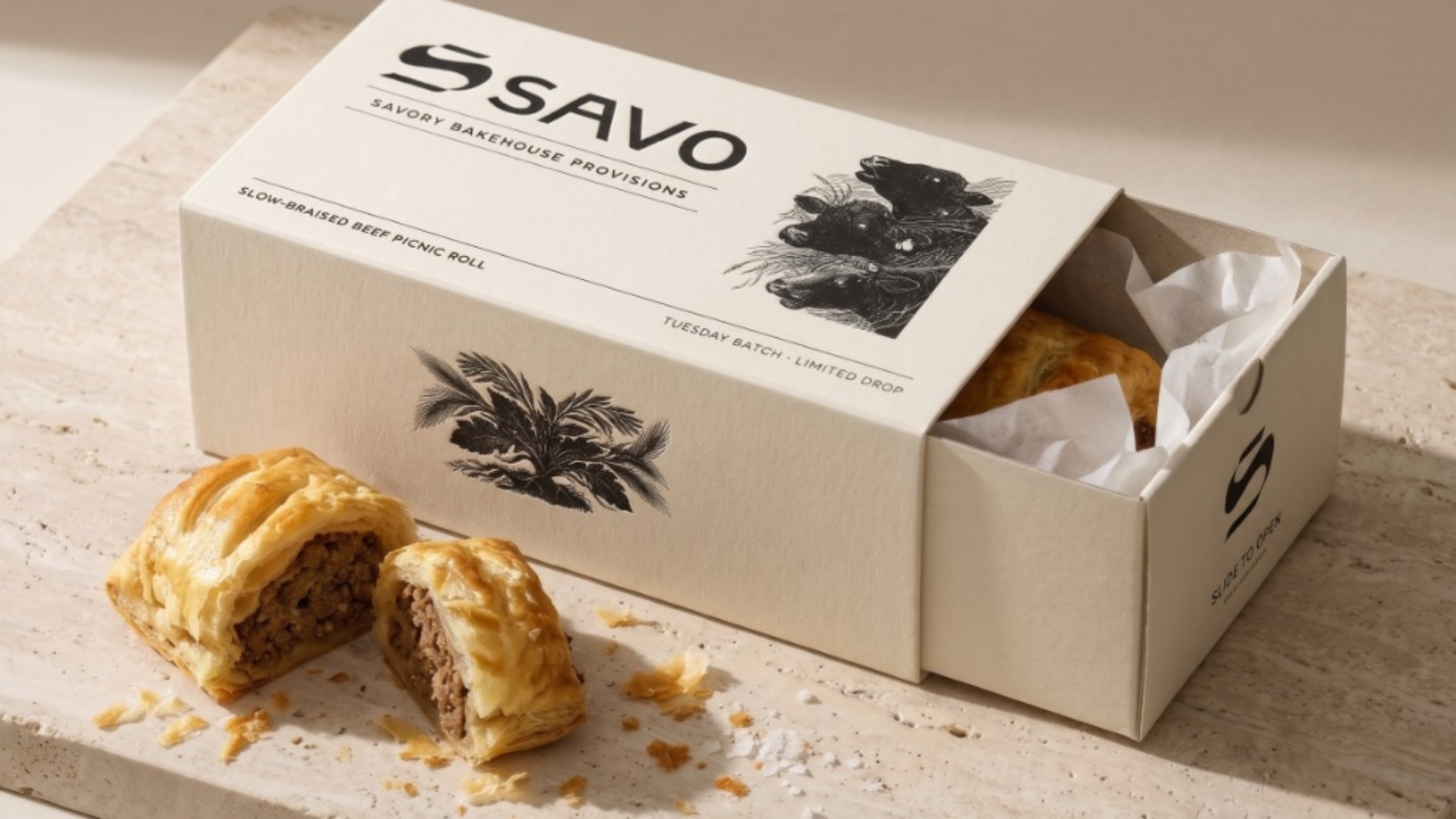
My goal is to engineer food packaging touchpoints that handle natural moisture and oils with dignity. Instead of hiding the product inside generic commercial film, I specify breathable butcher wraps, sliding rigid presentation boxes, and tactile cotton string ties that turn an everyday deli purchase into an authentic culinary discovery.
The Engineering of Woodcut Marks Across Scales
Delicate hairline logos designed exclusively for digital screens fail completely in commercial deli environments. Once printed onto rough, unbleached kraft papers or greaseproof sheets with water-based inks, thin lines bleed and fragile details collapse into muddy ink spots.
I build marks inspired by 19th-century European woodcut illustrations, translated into disciplined mathematical vector curves. By carving deep negative spaces and enforcing substantial stroke weights, the mark maintains immediate recognition whether pressed in gold foil on presentation boxes, stamped in black ink on porous butcher paper, or scaled down to a small mobile browser mark.
In the SAVO identity, the central cleaver silhouette and rising smoke plume are engineered around strict geometric radii. The chiseled crosshatching inside the blade provides the authentic character of an artisan butcher shop while remaining completely stable across flexographic plates and hot-stamp brass dies.

A Cohesive System for Counter and Pantry
A specialty deli inventory is diverse. The visual system must transition effortlessly from whole cured sausages and sliced prosciutto to hot savory bakehouse rolls, specialty mustards, and wholesale provisions.
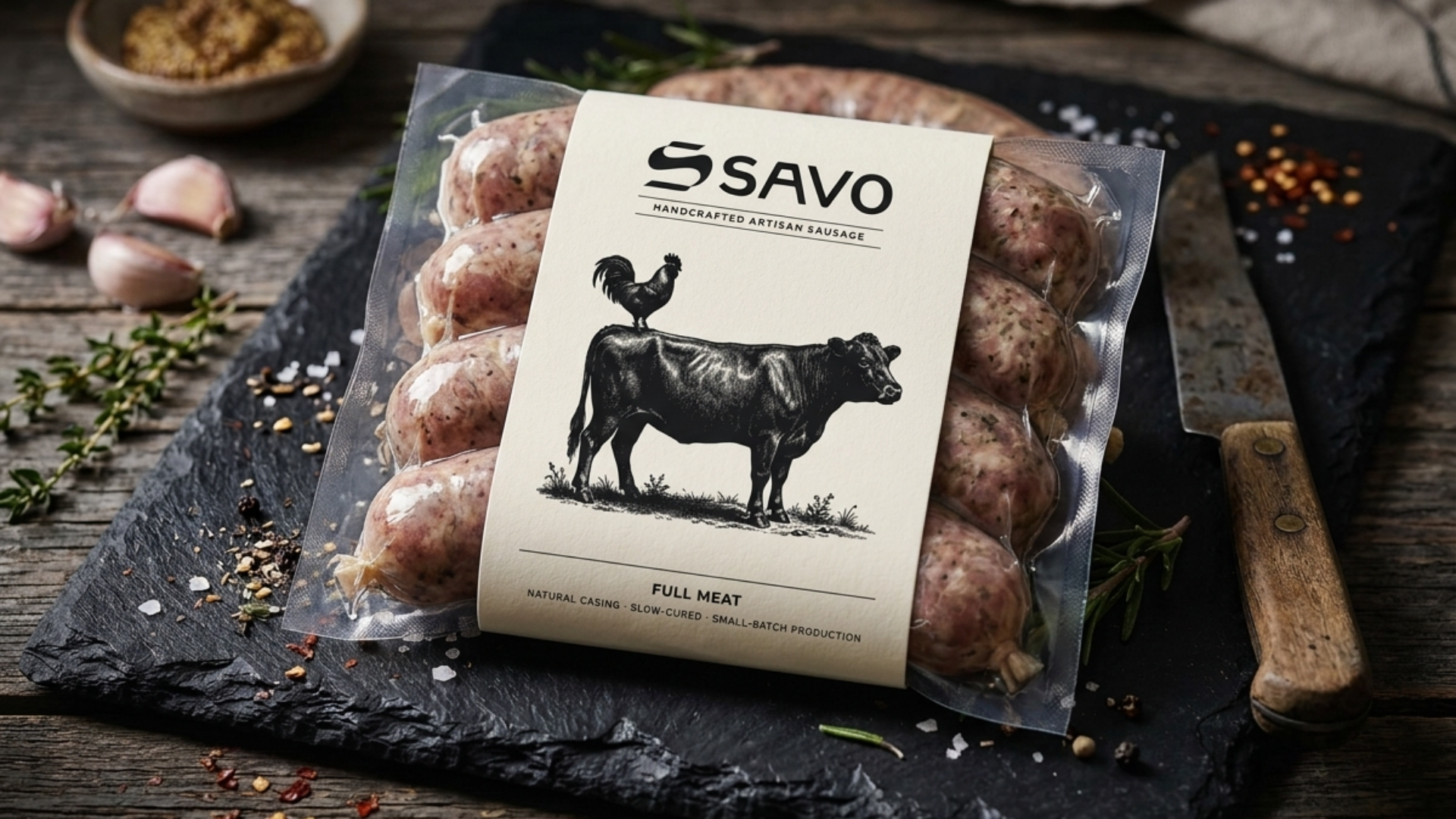
Relying on a single repetitive logo mark across every product creates visual fatigue. Instead, I structure a comprehensive graphic suite combining the primary mark with secondary guild rosettes, botanical ingredient matrices, and technical batch numbering blocks. This gives the business the flexibility to brand a small vacuum package, a large take-out box, or a seasonal glass jar while maintaining a unified boutique shelf presence.

| Packaging Format | Substrate Specification | Functional Role | Print Method |
|---|---|---|---|
| Rigid Slide Box | 350 gsm unbleached virgin kraft | Charcuterie presentation, corporate gifting | Matte black foil stamp and blind deboss |
| Vacuum Sausage Sleeve | 250 gsm grease-resistant food board | Cured sausage retail display and batch notes | Soy-based 2-color offset lithography |
| Butcher Counter Wrap | 45 gsm unbleached vegetable parchment | Moisture retention and grease containment | Water-based food-contact flexography |
| Guild Seal Rosette | 70 gsm wet-strength unbleached label | Tamper evidence, curing dates, box seals | Serrated die-cut with matte varnish |
Elevating Food Into a Tactile Experience
When a patron visits an independent deli and pays a fair premium for small-batch charcuterie or fresh savory pastries, the handover at the counter is the culmination of their experience.
I structure physical packaging touchpoints to build anticipation:
1. The Tactile Handover: The sturdy resistance of thick unbleached paper bags, printed with a high-contrast emblem and restrained typography.
2. The Deliberate Reveal: Breaking the serrated guild seal and sliding open a rigid kraft box, exposing the natural greaseproof wrapping within.
3. The Sensory Arrival: Unfolding the breathable vegetable parchment to reveal the deep crimson color, smoke marbling, and curing quality of the provisions.
This attention to physical craftsmanship creates lasting customer loyalty. The customer is not merely purchasing grocery items; they are engaging in a shared appreciation for culinary provenance and authentic food traditions.